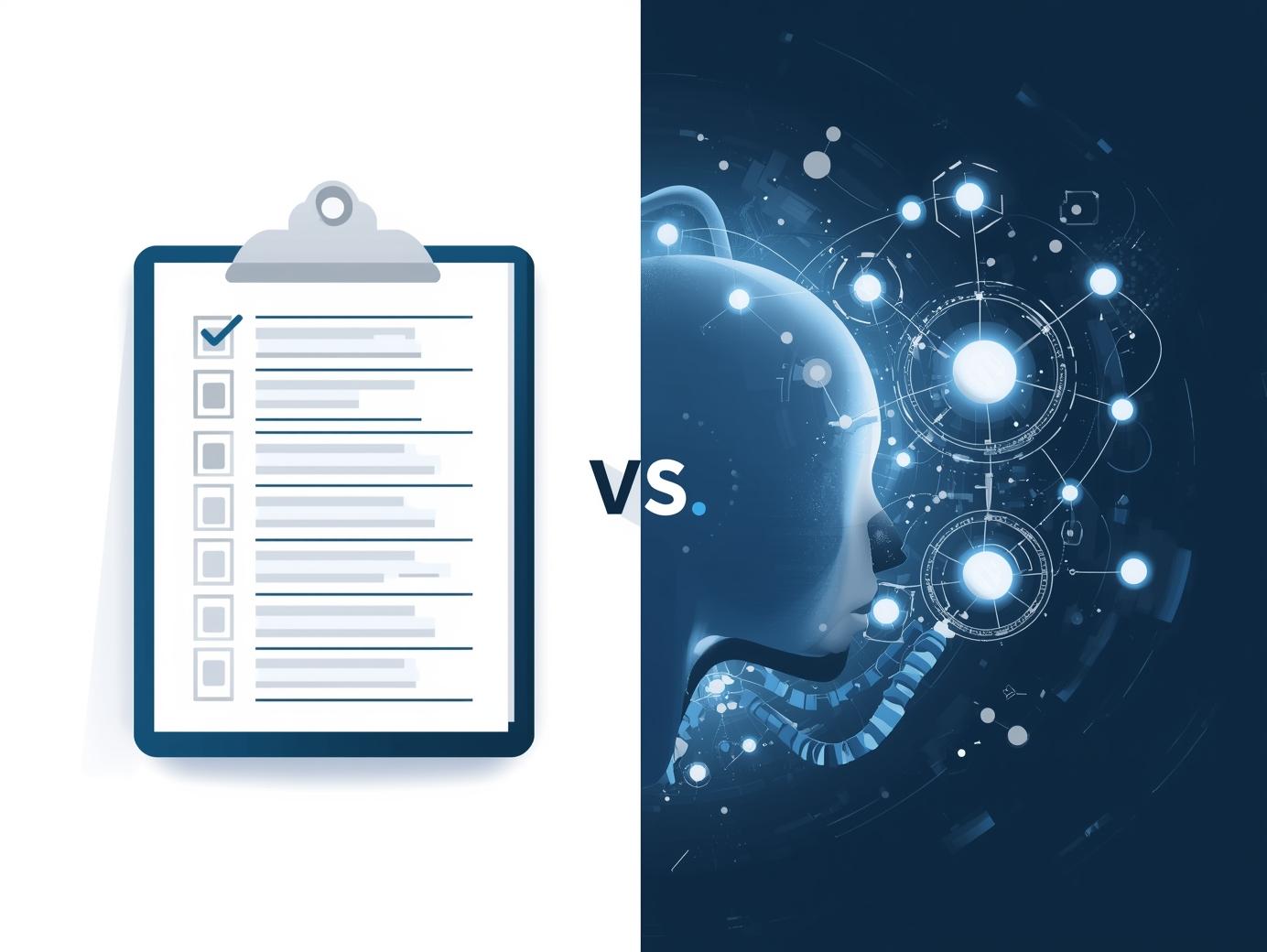
Marketing Checklists vs AI Assistants: When to Use Each
Marketing checklists and AI assistants both promise to make marketing easier, but they solve very different problems. Understanding when you need structure and when you need automation can transform your results.
Why This Debate Matters Now
Marketing teams today are pulled in two directions. One camp says “document everything with checklists,” while another says “just let AI handle it.” Both approaches have truth in them, but going all-in on either side usually leads to chaos or burnout.
Checklists give you structure: clear steps, accountability, and repeatability. AI assistants give you power: speed, ideas, and automation. This blog post shows how to decide when you need each, and how to combine them into a simple, reliable system.
What Are Marketing Checklists (and Why They Still Matter)?
Marketing checklists are step-by-step instructions for recurring tasks like publishing a blog post, launching a campaign, onboarding a client, or sending a newsletter. They turn “what do we do next?” into a clear sequence so anyone on the team can follow along.
The benefits are significant. You get fewer mistakes, consistent quality, easier delegation, and faster onboarding for new team members. The downside is that checklists can feel rigid and manual. Without help from tools, they rely heavily on human discipline and can be slow to adapt when things change.
What Are AI Assistants in Marketing?
AI assistants are tools that help with thinking and doing. They can draft copy, brainstorm ideas, summarize data, generate images, or even automate routine steps across tools. Think of them as very fast junior assistants that never get tired.
Their strengths are speed and scale. An AI assistant can generate 20 ad variations, 10 subject lines, and a blog outline in minutes. But they also have limits. They don’t understand your business context like a strategist does, can make factual mistakes, and need direction plus human review to be truly effective.
The Fundamental Difference: Process vs Power
The simplest way to understand the difference is this: checklists are the map, AI is the engine. A map tells you where to go and in what order. An engine gives you the power to get there quickly.
If you only have AI, you might move fast but in random directions. If you only have checklists, you know where to go but progress can be slow and exhausting. Mature marketing teams start with a map (checklist) and then plug AI into specific steps where extra power is useful.
When You Need Structure: Situations Where Checklists Win
Some situations demand structure more than raw speed. In these cases, checklists should lead and AI should only support.
Onboarding new clients or team members. You need a consistent experience with specific steps, documents, and approvals so nothing critical is missed.
Compliance-sensitive or regulated tasks. Industries like finance, health, or legal require documented steps and clear sign-offs, not just “AI suggested this.”
Complex multi-step campaigns. Launching a product, running a webinar funnel, or managing a multi-channel promotion involves many moving parts. A checklist ensures each element is done in the right order.
In these cases, checklists protect quality, reduce risk, and make results more predictable. AI can still help inside some steps, but it should not define the process itself.
When You Need Automation: Situations Where AI Shines
Other tasks are mostly repetitive, creative-heavy, or data-heavy. Here, AI can dramatically increase output without sacrificing much control.
Drafting content. Blog posts, emails, social captions, ad copy, FAQs. AI is excellent at generating first drafts and variations.
Brainstorming and ideation. Need 30 headline ideas, new angles for a campaign, or fresh hooks? AI can provide a wide range of options quickly.
Summarizing and analyzing data. AI can condense long reports, extract key insights from customer feedback, or highlight trends from performance metrics.
These are pattern-based tasks where speed, volume, and idea generation matter more than strict process. Humans still decide which outputs to keep and how to refine them.
Red Flags You’re Over-Relying on Checklists
Too much structure with too little automation creates its own problems. Watch for these warning signs.
Everything is manual and slow. Your team spends most of the day “ticking boxes” rather than testing new ideas or optimizing campaigns.
No room for creativity. People follow steps mechanically and rarely experiment because there’s no time or bandwidth.
Bottlenecks around content and reporting. Launches and reports are delayed because drafting and analysis are done by hand.
When you see this, it’s a sign to inject AI into the heaviest parts of the checklist: content drafting, brainstorming, and basic data crunching, while keeping the overall structure intact.
Red Flags You’re Over-Relying on AI
On the other side, some teams lean too hard on AI without any real process. Watch for these warning signs.
No documented workflows. Everything lives in random chats and prompts. If one person leaves, nobody knows “how things are done.”
Inconsistent quality and brand voice. Assets vary wildly in tone, structure, and depth because each AI interaction is improvised.
Hard to scale or delegate. New team members can’t easily replicate what works because there’s no written process, just “ask the AI and see.”
In this case, the solution is to turn your best repeated AI workflows into simple checklists or SOPs so they can be repeated, improved, and delegated.
Building a “Checklist-First, AI-Powered” Workflow
The sweet spot is a hybrid model. Start with structure, then supercharge it with AI. Here’s a simple approach.
Define the process as a checklist. Write out the steps for a recurring task like publishing a blog post, launching a campaign, or sending a weekly newsletter.
Identify high-effort steps. Highlight steps that are repetitive, creative-heavy, or involve a lot of manual data work.
Plug AI into those specific steps. Use AI for ideation, drafting, summarizing, and generating variations while keeping humans in charge of strategy and approvals.
This way, your checklist keeps everything organized, and AI reduces the time and effort needed for the most demanding parts.
Example: Blog Post Production Workflow
Consider a standard blog workflow with seven steps.
- Choose topic and keyword
- Create outline
- Write first draft
- Edit for brand voice and clarity
- Add SEO elements (headings, meta, internal links)
- Publish and format
- Repurpose for social and email
In a hybrid setup, AI helps with topic ideas, outline drafts, and first-pass copy, plus FAQ suggestions and repurposed snippets. The human team validates the topic, refines the structure, polishes the draft, checks facts, and finalizes SEO details.
The checklist ensures nothing is missed. AI ensures the team doesn’t get stuck on blank pages or repetitive text tasks.
Example: Lead Nurture Email Sequence
A typical nurture sequence might follow this checklist approach.
- Define target segment and goal
- Map the customer journey and email topics
- Draft each email
- Edit and QA for brand voice and compliance
- Set up automation and triggers
- Monitor performance and optimize
AI can suggest journey ideas and content angles for each email, draft subject lines, preview text, and body copy variations, and propose A/B test ideas based on past performance patterns. Humans decide positioning, offers, and segmentation rules, and perform final review before anything goes live.
A Simple Guide to Choosing Structure vs Automation
To decide whether a given task needs more checklist or more AI, ask yourself these questions.
Is it high-risk, compliance-sensitive, or brand-defining? Lean on checklists, approvals, and human ownership. AI can support, but not lead.
Is it repetitive, pattern-based, or creative-heavy but low-risk? Lean more on AI for speed and volume, with light human checks.
Does this task define your strategy, positioning, or pricing? Keep it human-led with AI used only for research, options, or draft ideas.
Using this lens helps prevent over-automation in the wrong areas and under-automation where AI could truly help.
Common Mistakes to Avoid
When blending checklists and AI, avoid these pitfalls.
Letting AI run without any underlying process leads to random, unrepeatable successes and lots of failures.
Treating checklists as frozen. As AI improves steps, update your checklists to reflect new best practices.
Skipping human review. Allowing AI-generated content, offers, or messages to go live without a human pass can damage trust and create risk.
Setting Up Your First Hybrid System in One Week
You don’t need a huge project to start improving. In one week, you can build a working system.
Days 1-2: List your recurring marketing processes and pick one, like blog production, newsletters, or ad creation.
Days 3-4: Turn that process into a clear checklist or SOP.
Days 5-6: Identify 2-3 steps where AI can help and test specific prompts or tools.
Day 7: Document the new “checklist + AI” workflow and share it with your team.
From there, repeat the same approach with your next important process. Whether you’re managing content calendars or coordinating campaigns, this systematic approach helps you scale efficiently without losing quality control.
Stop Choosing Sides: Combine Them
Checklists keep your marketing organized, consistent, and teachable. AI assistants keep it fast, flexible, and scalable. The most effective teams don’t argue about which is better. They use both together.
If your marketing feels chaotic, start by writing one simple checklist. If it feels heavy and slow, bring AI into the most repetitive steps. Over time, you’ll build a human-led, AI-powered system that’s structured enough to trust and automated enough to grow.
This balanced approach works across all marketing channels, from content creation to campaign management. Whether you’re implementing SEO services in Islamabad or managing broader digital marketing services in Islamabad, combining structured processes with smart automation helps you deliver consistent results while maintaining the flexibility to adapt and improve.