From SEO to GEO: Your Complete Guide
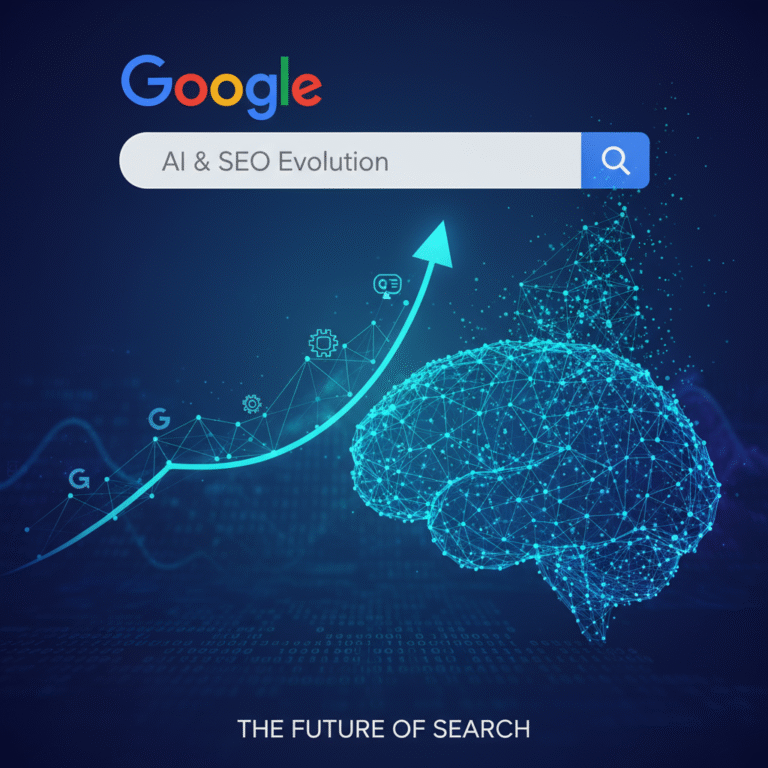
Moving from search engine optimization to generative engine optimization isn’t about abandoning what works. It’s about expanding your reach to meet people wherever they’re searching for answers. This guide shows you how to future-proof your visibility in an AI-first world.
Introduction: Search Has Outgrown Google
In 2024 and 2025, people don’t just “Google it” anymore. They search on TikTok, Instagram, YouTube, Amazon, Reddit, app stores, and inside AI tools like ChatGPT and Gemini. Often, they do this before or instead of visiting a traditional search results page.
At the same time, AI overviews and generative search experiences answer many queries directly. This pushes websites further down the page and reduces clicks. That’s why a new mindset is emerging: instead of optimizing for a single search box, brands need “Search Everywhere Optimization” and Generative Engine Optimization (GEO) to stay visible across all touchpoints.
If you’re looking for professional SEO services in Pakistan that understand both traditional and emerging search strategies, it’s essential to work with experts who can help you navigate this evolving landscape.
What SEO Traditionally Meant
Traditional SEO focused on winning positions in Google’s search engine results pages (SERPs). The tools were keyword research, on-page optimization, backlinks, and technical performance. The goal was simple: attract as many qualified visitors as possible by ranking high for the right queries.
Even now, Google still sends a huge share of traffic for most sites. Strong SEO foundations like fast pages, good UX, and relevant content remain non-negotiable if you want to be discoverable at all. Comprehensive Digital Marketing Services in Islamabad can help you build and maintain these essential foundations while preparing for the future of search.
What Is GEO? (Generative Engine Optimization)
GEO, or Generative Engine Optimization, is the practice of shaping your content and brand so AI-driven engines choose you as a trusted source in their generated answers. These engines include Google AI Overviews, Microsoft Copilot, ChatGPT, Gemini, and similar models.
Instead of focusing only on ranking positions, GEO focuses on your “reference rate.” That’s how often these AI systems cite, mention, or draw from your content when they construct summaries and recommendations. In this world, success isn’t just about getting a click. It’s about becoming the default answer that shows up inside the conversation.
Why Optimizing Only for Google Is No Longer Enough
Zero-click searches are now common. AI overviews, featured snippets, and rich results often resolve a user’s question directly on the results page. At the same time, younger audiences increasingly treat TikTok, YouTube, Amazon, and in-app search as their primary discovery tools. They never touch a traditional SERP.
Brands that optimize only for Google risk losing attention to competitors who show up consistently in social search feeds, marketplace rankings, and AI-generated answers, even when no classic “ranking” is visible.
How AI Is Reshaping the Search Landscape
AI-powered search experiences aggregate information from multiple sites, feeds, and data sources. Then they present one conversational answer instead of a long list of links.
These systems rely heavily on semantic understanding. They analyze entities, relationships, and context rather than just matching exact keywords. As a result, content needs to be clearer, more structured, and more explicitly connected to related topics so AI can safely quote it.
Key Differences Between SEO and GEO
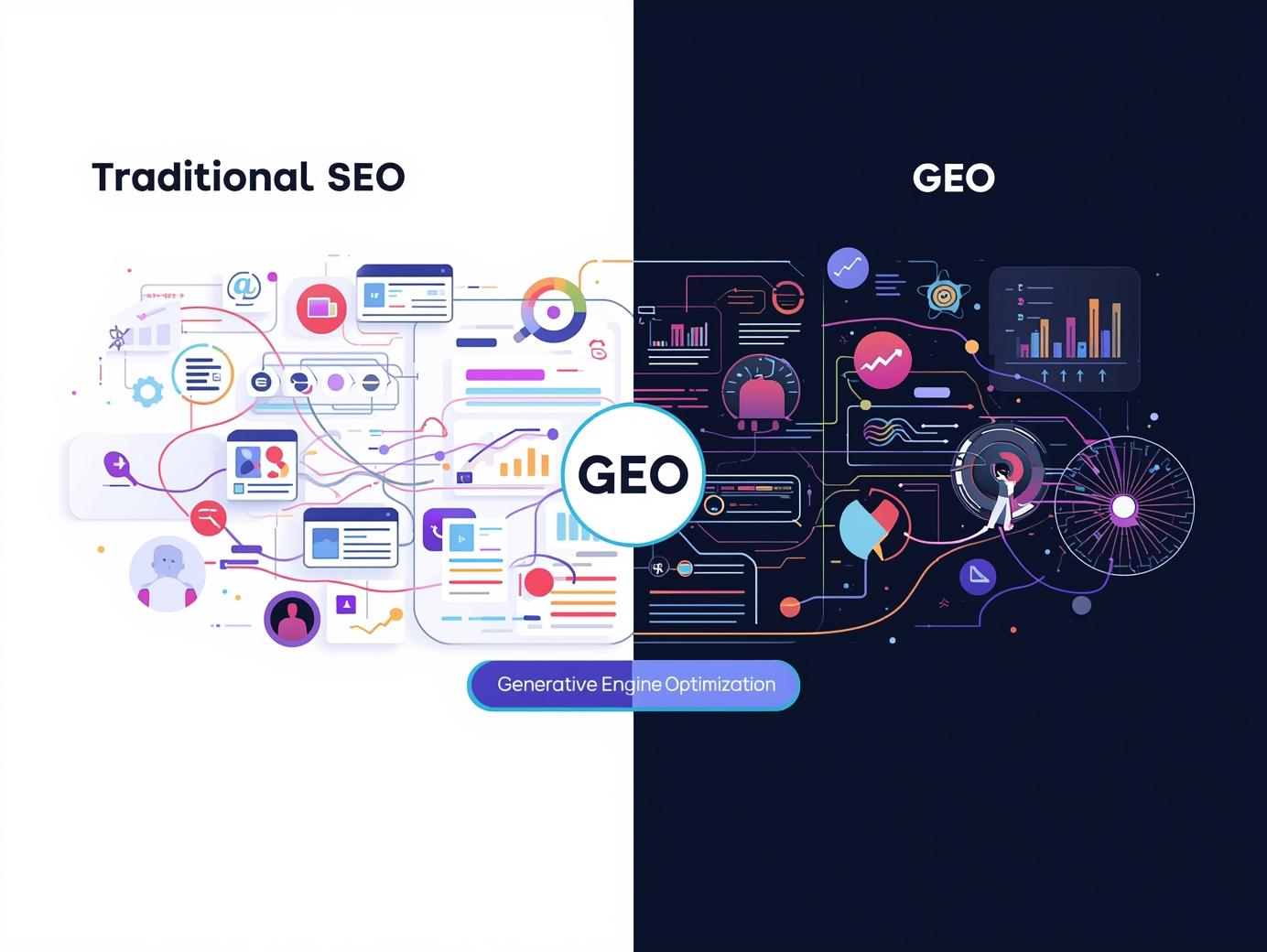
While SEO and GEO share many principles, they’re not the same. At a high level:
SEO aims to get users to click from SERPs to your website by ranking higher for targeted queries.
GEO aims to get AI engines to mention or cite you inside their generated responses, even if the user never clicks through.
Their success metrics also differ:
SEO measures rank positions, organic traffic, backlinks, and on-site behavior.
GEO tracks brand mentions in AI answers, citation frequency, AI-driven referrals, and overall AI “share of voice.”
SEO vs GEO at a Glance
| Aspect | SEO (Search Engine Optimization) | GEO (Generative Engine Optimization) |
|---|---|---|
| Main target | Traditional search engines like Google and Bing | AI-powered engines and assistants (ChatGPT, Gemini, Copilot, etc.) |
| Primary goal | Get clicks to your website from SERPs | Get cited or mentioned in AI-generated answers |
| Core focus | Keywords, backlinks, technical SEO, UX | Clear answers, entities, citations, semantic clarity |
| Key metrics | Rankings, organic sessions, CTR, backlinks | AI mentions, citation rate, AI referral traffic |
| User journey | Search → click link → browse site | Ask → read AI summary → maybe visit site or act directly |
| Role today | Mature, essential foundation | Emerging, future-proofing layer built on SEO |
The New Multi-Platform Search Ecosystem
Search now happens across a network of “surfaces”: TikTok, YouTube, Amazon, app stores, Reddit, LinkedIn, review sites, and AI assistants. Each of these platforms has its own algorithm, ranking signals, and content formats.
This means the same user can discover your brand via a short-form video, a product listing, a Reddit thread, or an AI recommendation long before they see a Google result. Understanding where your audience actually searches is the first step in moving from SEO to GEO.
Why GEO Builds On, Not Replaces, SEO
GEO doesn’t make SEO obsolete. It depends on it.
AI systems and modern search engines still need technically sound, crawlable, well-structured websites with strong user experience to trust and reuse your content. GEO simply extends that foundation by ensuring your best content is structured and distributed in ways that AI, social algorithms, and marketplace engines can easily interpret, cross-check, and recommend.
Core Principles of GEO-Ready Content
To become AI-friendly, your content must:
Provide clear, concise, factually accurate answers to specific questions, ideally near the top of the page.
Demonstrate strong E-E-A-T: visible authors, credible credentials, reliable references, and a consistent brand presence across multiple platforms.
These elements help generative engines see your content as a safe, authoritative source to quote in their summaries.
Structuring Content for AI and Entities
Modern search and AI engines think in terms of entities (people, brands, products, places) and the relationships between them.
Structuring content with clear headings, FAQs, and logically separated sections helps these systems map your information correctly. Adding appropriate structured data, such as schema markup for articles, products, FAQs, and organizations, further clarifies what your content is about and how it connects to related concepts.
Designing a GEO Strategy Beyond Google
A GEO-driven strategy starts by mapping your audience’s real journey. Where do they ask questions? Which formats do they trust? Which platforms most influence their buying decisions?
Once you know this, you can plan “Search Everywhere Optimization.” Deliberately place optimized content on the channels that matter: website, social platforms, marketplaces, communities, and AI-friendly resources. The objective is to show up with the right format and message at each step, not just fight for a single SERP.
Platform-Specific GEO Tactics
Different platforms need different tactics:
Social search: Short-form videos, carousels, and posts should use natural language hooks and relevant keywords in captions, descriptions, and on-screen text to surface in search and recommendation feeds.
Marketplaces and app stores: Product titles, descriptions, screenshots, tags, and reviews must be optimized like mini-SEO projects because these environments have their own ranking factors.
Treat each major platform as a search engine with its own rules, not just a distribution channel.
GEO for AI Assistants and Chatbots
To increase your chances of being cited by AI assistants, focus on creating authoritative, niche content that is easy to verify and reuse.
Evergreen resources, such as in-depth guides, FAQs, research summaries, and clear how-to content, tend to be favored because they answer recurring questions reliably. Consistent facts, up-to-date statistics, and external mentions on reputable sites further signal that your brand is safe for AI to recommend.
GEO Metrics and Measurement
GEO performance can’t be captured by rank tracking alone. New metrics to watch include:
- Brand mentions inside AI answers
- Presence in AI snapshots and summaries
- Social search impressions
- Referral traffic from AI-powered tools
Alongside this, marketers need to monitor brand demand (branded search volume), direct traffic, and multi-channel attribution to see how “search everywhere” visibility translates into business outcomes.
Practical Roadmap: Moving From SEO-Only to SEO + GEO
A practical path to GEO-readiness can look like this:
1. Stabilize the SEO Foundation
Fix crawlability, speed, mobile UX, and indexation issues. Identify and upgrade your top-performing content so it’s accurate, structured, and clearly authored.
2. Map Search Touchpoints and Prioritize Platforms
Interview customers, analyze analytics, and research where your audience searches beyond Google. Pick 2 to 3 non-Google platforms (e.g., TikTok + Amazon + Reddit) to focus on first instead of spreading yourself too thin.
3. Create Platform-Native, AI-Friendly Content
Repurpose core content into formats that match each platform’s norms (short-form video, carousels, Q&A posts, product pages). Use clear questions and answers, structured sections, and schema markup so both search engines and AI systems can reuse your content easily.
4. Test, Measure, and Iterate
Track which platforms and content types actually drive discovery, mentions, and conversions, then double down on what works. Adjust topics and formats based on emerging AI search behaviors and user questions.
Risks of Staying Google-Only
Relying solely on Google makes your brand vulnerable to sudden algorithm changes, expanding AI overviews, and shifts in user behavior that reduce organic traffic overnight.
Meanwhile, competitors who consistently show up in social feeds, marketplaces, communities, and AI answers will accumulate more attention, trust, and direct demand over time. Put simply, the cost of ignoring GEO is becoming invisible in the places where decisions increasingly start.
Final Perspective: The Future Is “Search Everywhere”
SEO isn’t dead. It’s the foundation of how users and machines find and understand your brand.
However, in an AI-driven, multi-platform world, long-term success requires thinking beyond one search box and embracing GEO. Ensure your brand is present, consistent, and trustworthy wherever people and AI systems look for answers.
Brands that design for “search everywhere” today will be the names that AI recommends and humans remember by default tomorrow. Whether you need expert SEO services in Pakistan or comprehensive Digital Marketing Services in Islamabad, partnering with professionals who understand both traditional SEO and GEO strategies will give you the competitive edge you need in this new era of search.