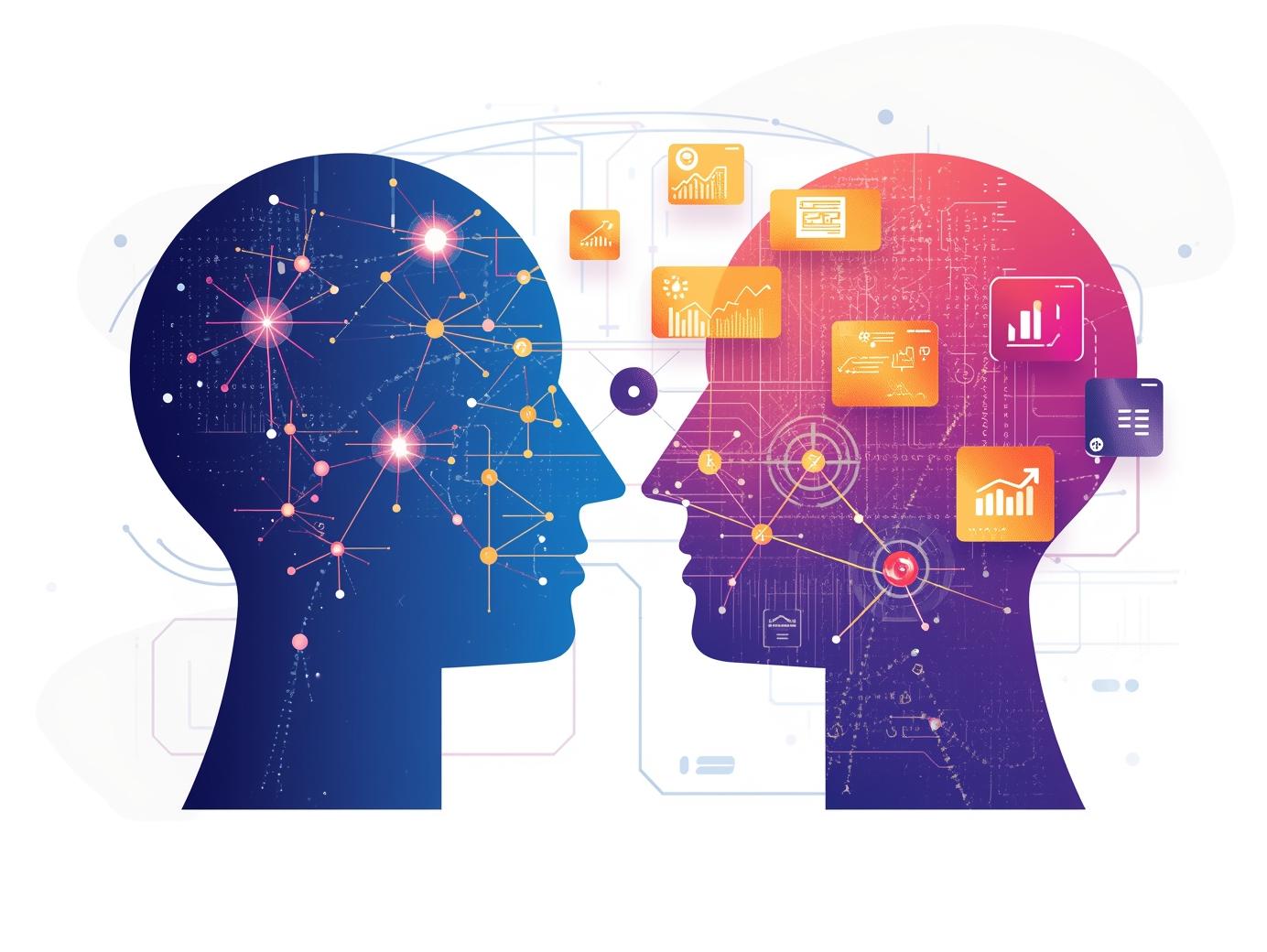
Is AI Replacing Digital Marketing Agencies? Here’s the Honest Reality
AI is reshaping digital marketing, but it is not making good agencies obsolete. Instead, it is changing how agencies deliver value and what clients should expect from them.
Introduction: The Big AI Question
Everywhere in marketing right now, people are asking the same thing: “If AI can write copy, design creatives, and analyze data, do I still need a digital marketing agency?” That question makes sense when tools promise one-click content, automated ads, and “done-for-you” funnels.
The honest reality is that AI is changing how agencies work, not eliminating the need for them. Agencies that embrace AI, including leading digital marketing services in Islamabad, are becoming faster, more strategic, and more efficient, while businesses that try to go “AI-only” often discover the hard way that tools without expertise rarely produce consistent results.
What AI Does Really Well in Digital Marketing
AI absolutely shines at repetitive, data-driven, and pattern-based tasks. It can:
- Generate first drafts of blog posts, emails, social captions, and ad copy in seconds
- Analyze large amounts of performance data to spot trends humans might miss
- Automate routine tasks such as tagging data, summarizing reports, and building simple campaign variants
For small businesses and lean marketing teams, this speed and scale are extremely attractive. AI can remove a lot of the “grunt work,” reduce costs, and dramatically accelerate experimentation. Used correctly, it boosts productive output far beyond what a human-only team could do.
What AI Still Cannot Do (And Why That Matters)
Despite the hype, AI does not truly “understand” a business, a brand, or a market at a deep level. It predicts likely answers based on patterns, but it does not own outcomes, cannot be held accountable, and lacks real-world context.
AI struggles with:
- Nuanced brand positioning and messaging in crowded markets
- Complex business trade-offs, like balancing profit margins with growth
- Emotional intelligence, negotiation, and politics inside an organization
It can also produce generic or incorrect content, misinterpret niche audiences, and hallucinate facts. Without an experienced strategist reviewing and directing it, AI can push a brand in the wrong direction surprisingly quickly.
How AI Is Changing the Role of Digital Marketing Agencies
Traditionally, agencies spent a lot of time on manual execution: writing copy from scratch, pulling data into spreadsheets, and building reports. AI is dramatically reducing the time needed for many of those lower-level tasks.
Modern agencies are moving “up the value chain” toward:
Strategy: Positioning, offers, customer journeys, and channel mix
Creative direction: Big ideas, campaigns, and storytelling that stand out
Orchestration: Designing and managing AI-assisted workflows, tools, and data flows
Instead of being replaced, agencies are becoming the architects and operators of human-plus-AI systems that businesses cannot easily build or maintain on their own.
Tasks AI Can Largely Automate (Or Make Much Cheaper)
There are clearly areas where AI can handle a large portion of the work or at least cheapen it significantly:
Content production support: Brainstorming topics, drafting outlines, writing first drafts, and suggesting variations
Basic SEO support: Long lists of keyword ideas, rough meta titles and descriptions, draft FAQ sections. However, comprehensive strategies from an SEO services company in Islamabad still require human expertise to execute technical audits, build authoritative link profiles, and develop strategies that align with business goals.
Reporting: Summarizing performance metrics, highlighting winners and losers, and drafting commentary
For agencies, this means less time spent on repetitive production and more time on high-impact thinking. For clients, it can mean faster delivery, more testing, and in some cases, more value at the same or lower price point.
Tasks Where Human Agencies Are Still Essential
There are critical areas where AI cannot replace the judgment and responsibility that come from experienced humans and structured teams:
Brand and positioning: Defining who you are, why you’re different, and who you serve best
Offer design and funnel architecture: Crafting compelling offers, pricing, upsells, and multi-step funnels across channels
Channel strategy and budgeting: Deciding how to balance SEO, paid ads, email, social, and offline efforts
Agencies also manage the human side: stakeholder communication, aligning with sales, coordinating with product or operations, and navigating internal politics. AI is not going to run a stakeholder workshop, defend a strategy in a boardroom, or adapt to messy real-world constraints.
Common Myths: “AI Is Free, So I Don’t Need an Agency”
Two dangerous myths appear repeatedly:
- “AI is free, so it replaces my marketing spend”
- “I just need good prompts instead of an agency”
In reality:
- Good AI setups still require time, data, experimentation, and the right tools
- Mis-configured campaigns, poor strategy, and untested funnels can waste far more money than any agency fee
- Tools do not equal outcomes; expertise is what translates tools into revenue and profit
Many businesses that try to “save money” with AI-only marketing end up returning to agencies after months of weak results, scattered experiments, and inconsistent branding.
Realistic Scenarios: Who Can Go “AI-Only” and Who Still Needs an Agency?
There are cases where an AI-only approach can work for a while:
- Solo creators or freelancers with marketing experience who just need help with speed
- Very early-stage projects where the goal is basic validation and low-risk testing
- Ultra-simple, local campaigns (for example, a single offer, one channel, small budget) run by someone with time and curiosity
But agencies become increasingly essential when:
- You want to scale across multiple channels and markets
- Your sales process is complex (B2B, high-ticket, regulated industries)
- You need consistent performance, advanced tracking, and clear accountability
As complexity and stakes rise, the value of a strategic, accountable partner rises faster than the value of “do-it-yourself with AI.”
How Smart Agencies Are Using AI Right Now
The best agencies are not fighting AI; they are building it into their operations. Typical uses include:
Content operations: AI helps with research, outlines, drafts, and variations, while humans handle strategy, editing, and final approval
Performance optimization: AI clusters keywords, identifies patterns in winning ads, and suggests new tests; strategists decide what to roll out
Personalization and segmentation: AI analyzes behavior and customer data, then proposes segments and personalized messages that humans refine
In this model, AI is the engine for speed and scale, and the agency is the driver that keeps it on the right road.
What Clients Should Look for in an AI-Savvy Agency
Instead of asking, “Will AI replace agencies?”, businesses should ask, “Is my agency actually good at using AI?” Look for:
Transparency: They clearly explain where and how they use AI in your campaigns
Process: They have documented workflows, QA steps, and human review for AI outputs
Strategy first: They start from goals, audiences, and positioning, not from tools
Data and privacy awareness: They know what data goes into tools and how it is protected
Good questions to ask potential partners:
- “How does your team use AI in SEO, content, and ads?”
- “What still requires human review or sign-off?”
- “How do you ensure originality, accuracy, and brand consistency in AI-assisted work?”
How AI Might Change Agency Pricing and Service Models
AI is already nudging agencies to rethink how they price and package services. Likely trends include:
- More productized services (fixed-scope SEO/content/ad packages built on efficient AI-assisted workflows)
- Hybrid models that combine consulting (strategy, training, AI setup) with implementation
- Greater emphasis on performance and outcomes (leads, revenue, ROAS), now that “hours spent” is less meaningful
For clients, this can be positive: as agencies become more efficient, they can either reduce costs, deliver more value for the same fee, or move into higher-impact strategic work.
Future Outlook: Will AI Ever Fully Replace Agencies?
Over the long term, AI will keep getting better at individual tasks: writing, image generation, predictive analytics, even some forms of campaign optimization. Some lower-skill roles will be automated or merged into more strategic positions.
But an “agency” is more than a set of tasks. It is:
- A mix of strategy, creativity, execution, and accountability
- A flexible team that adapts to market changes and client constraints
- A partner responsible for outcomes, not just outputs
As long as businesses operate in complex, competitive, human markets, there will be a role for human-led teams that can interpret context, manage risk, and take responsibility for results, using AI as a powerful set of tools.
Conclusion: The Honest Reality for Businesses
AI is not replacing digital marketing agencies; it is forcing them to evolve. Agencies that ignore AI will fall behind, and agencies that embrace it thoughtfully will offer more value than ever.
For businesses, the smartest move is not to choose “AI or agency,” but to look for a partner that understands how to combine human expertise with AI’s speed and scale. That combination is what turns powerful tools into predictable growth.